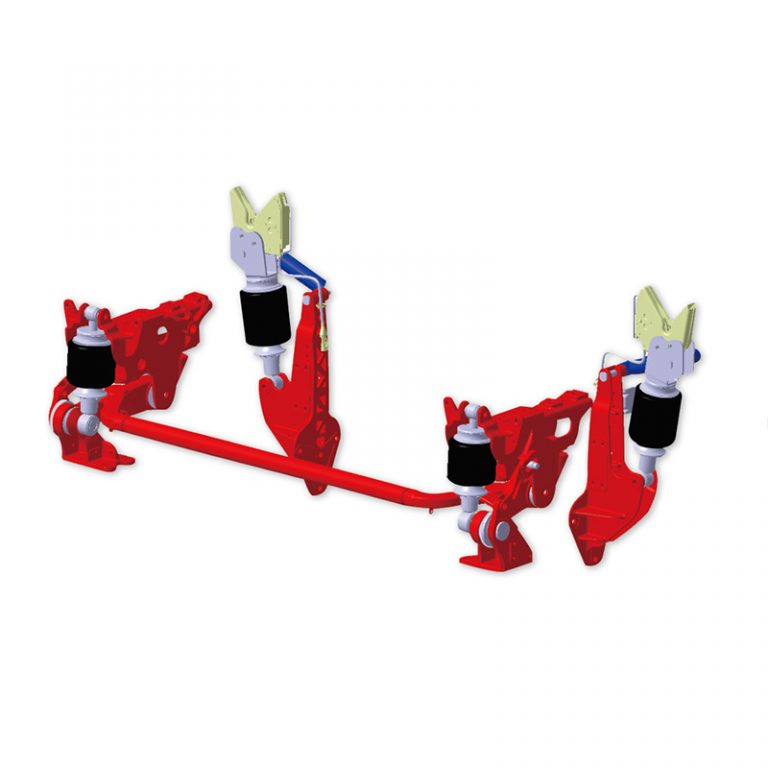
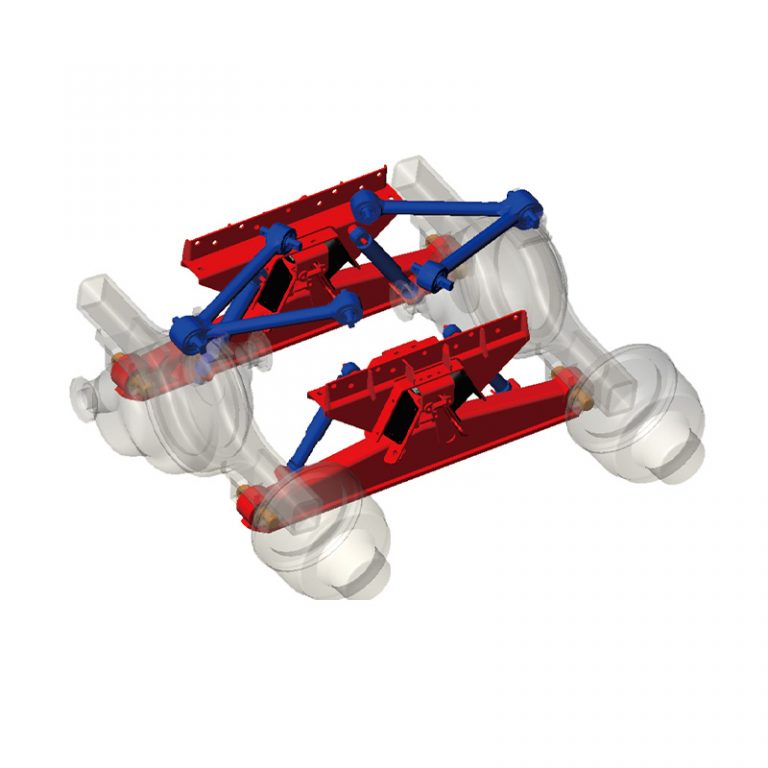
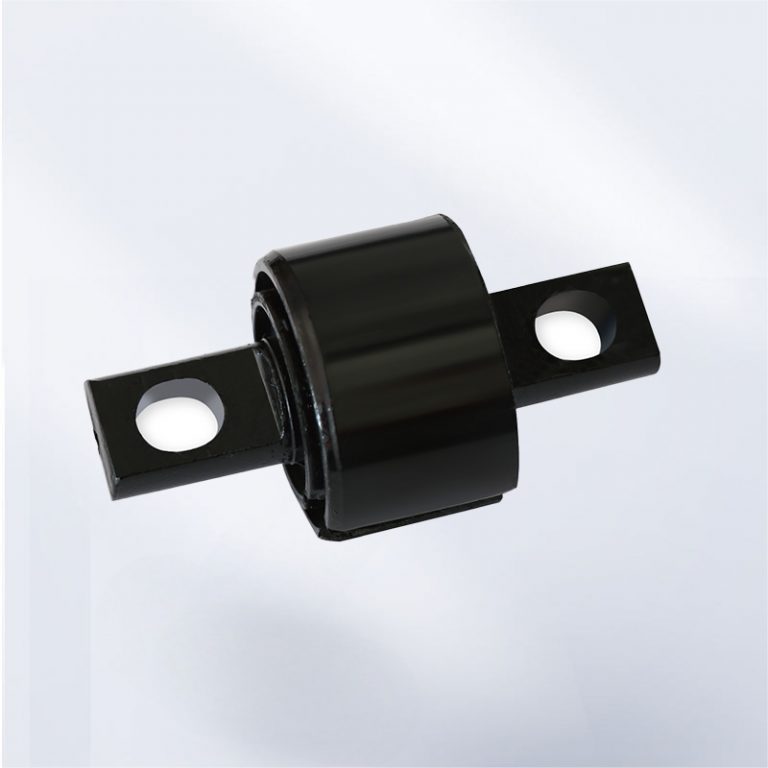
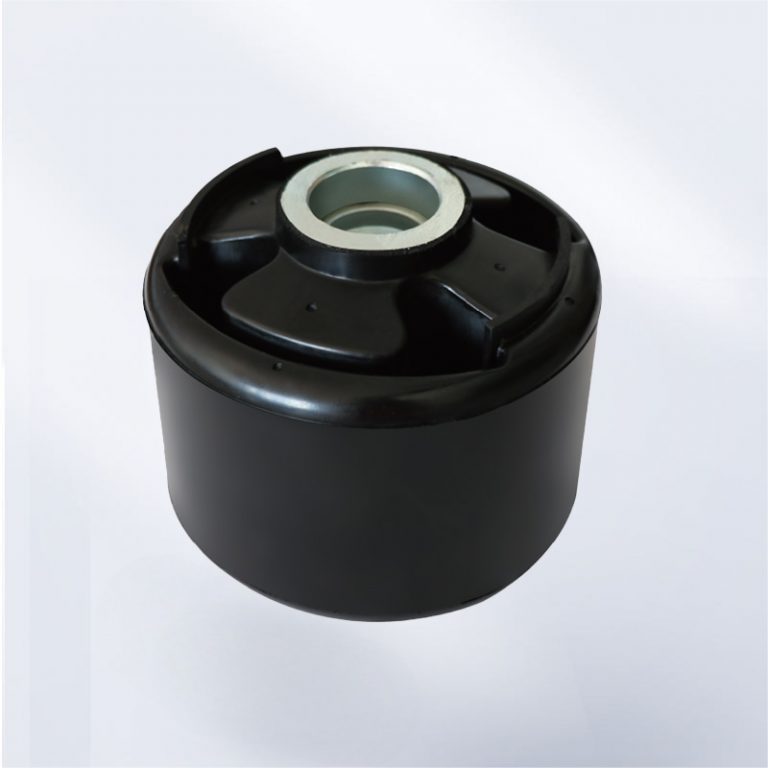
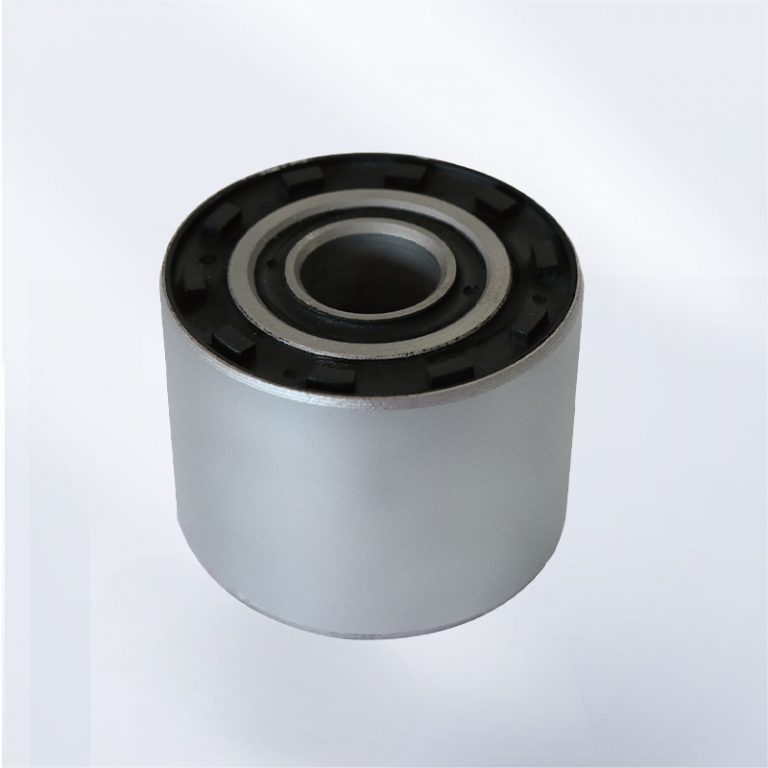
With air suspension, you have more space for varying loads, for changing the ride height and for more comfort while driving. A coil suspension is simpler and usually is cheaper than an air suspension. However, the simple spring characteristics of a coil suspension remain the same after the installation. Thus, air suspension is more suitable for trucks, buses, trailers etc. which do not carry a load of constant size.
メイチェン has worked in automotive suspension, rubber damping, and fluid delivery systems since 2004. Its work goes beyond supplying individual rubber parts. The company has a 120-member R&D team. The company’s CNAS-accredited test laboratory carries out testing of components and finished products at system-level. The fatigue testing facility enables the company to test air springs to destruction. The company also has dedicated production lines for air springs and other suspension products. The engineers are able to review axle load, suspension travel, required mounting space, working height and road conditions prior to recommending the most suitable product. The air spring is a component that works in conjunction with other items including dampers, guide rods, brackets, valves and the air-control system.
Air Suspension vs Coil Suspension: What Is the Main Difference?
Both systems carry vehicle weight and reduce road impact. Their working methods, however, are quite different.
How Air Suspension Supports the Vehicle
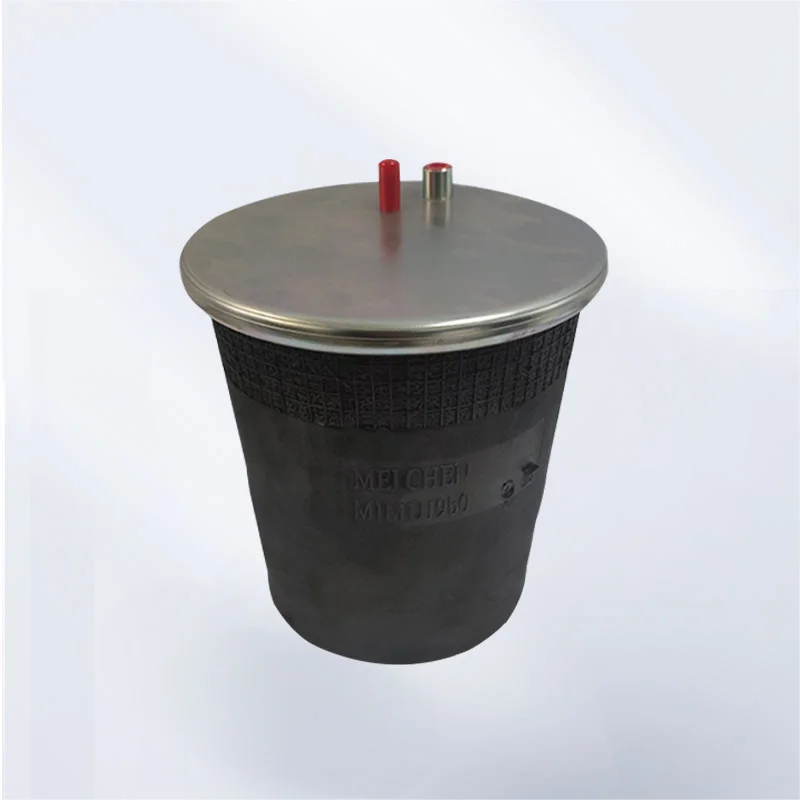
Air suspension uses flexible rubber air springs filled with compressed air. When the load rises, the system can add air. When the load drops, it can release air.
The height valve or electronic control unit is responsible for the control. With this system it is possible to keep the chassis at the designed ride height, even with varying vehicle load.
How Coil Suspension Reacts to Load
A coil suspension relies on steel coil springs. Wire thickness, coil shape, material, and spring length determine how much force the spring can support.
When you add weight, the coil compresses. It cannot change its own spring characteristics during operation. A spring designed for heavy loads may therefore feel firm when the vehicle is empty.
Why the Difference Matters in Daily Use
The main difference is not simply rubber versus steel. It is adjustability.
Air suspension can respond to load changes. Coil suspension follows the characteristics built into the spring. This affects ride height, comfort, suspension travel, and how the vehicle behaves when empty or fully loaded.
| Comparison Point | Air Suspension | Coil Suspension |
| Load response | Pressure can change | Spring characteristics remain fixed |
| Ride height | Can be managed by the system | Usually drops as load rises |
| Comfort range | More adaptable | Based on fixed tuning |
| System complexity | Higher | 下げる |
| Initial cost | Usually higher | Usually lower |
| Maintenance | Requires air-system checks | Generally simpler |
More details about the company’s suspension and damping work are available through its company background.
What Are the 7 Key Benefits of Air Suspension over Coil Suspension?
The benefits become much clearer when your vehicle moves between different operating conditions. A truck may leave fully loaded and return empty. A bus gains and loses passengers throughout the day. A trailer may need to work with several loading platforms.
1. More Consistent Ride Height under Changing Loads
A coil spring compresses further as payload increases. The vehicle may sit lower, which reduces available suspension travel and changes chassis position.
Air suspension can raise pressure as the load increases. This helps keep the vehicle near its designed ride height.
Correct ride height supports axle position, driveshaft angle, ground clearance, and tire contact. It also matters during wheel alignment. Air suspension alignment should be checked at normal operating height rather than with the chassis raised or lowered.
2. Better Comfort when Empty or Fully Loaded
A heavy-duty coil spring may support a full payload well but feel harsh when the vehicle is empty. A softer spring may improve the empty ride but compress too far under full load.
Air suspension can adjust pressure between these conditions. This gives the suspension a wider useful range.
Comfort still depends on the damper, bushing condition, axle geometry, and tire setup. Air pressure alone cannot correct a badly matched suspension.
3. Adjustable Vehicle Height
A complete air suspension system can raise or lower the chassis for certain jobs.
You may need a lower height for passenger entry or cargo loading. You may need more clearance on uneven ground. Trailers can also use height control to match loading platforms.
Coil suspension does not normally provide this function while the vehicle is operating.
4. Better Isolation of Road Shock and Vibration
Flexible rubber and compressed air can reduce part of the shock created by rough roads. Less vibration reaches the chassis, driver, cargo, and mounted equipment.
This matters on long-distance vehicles. Constant vibration can increase driver fatigue and place repeated stress on brackets, electronics, joints, and cargo.
The shock absorber still has a separate job. The air spring carries load and softens impact, while the damper controls repeated bouncing.
5. More Flexible Spring-Rate and Chassis Tuning
Air spring performance changes with air pressure, effective area, internal volume, working height, and suspension geometry.
Engineers can use these factors to match the suspension to different axle loads and body designs. One vehicle platform may therefore support several commercial applications without relying on one fixed coil spring specification.
6. Better Protection for Cargo and Chassis Parts
Reduced peak shock can help protect fragile goods and vehicle-mounted equipment.
Keeping the chassis near its normal height also preserves useful suspension travel. This lowers the chance of frequent bottoming or excessive extension.
The benefit depends on correct installation. Poor mounting alignment, worn dampers, and incorrect height settings can still cause harsh movement.
7. Greater Adaptability for Commercial Vehicles
Air suspension works well on heavy trucks, buses, trailers, lifting axles, and special-purpose vehicles.
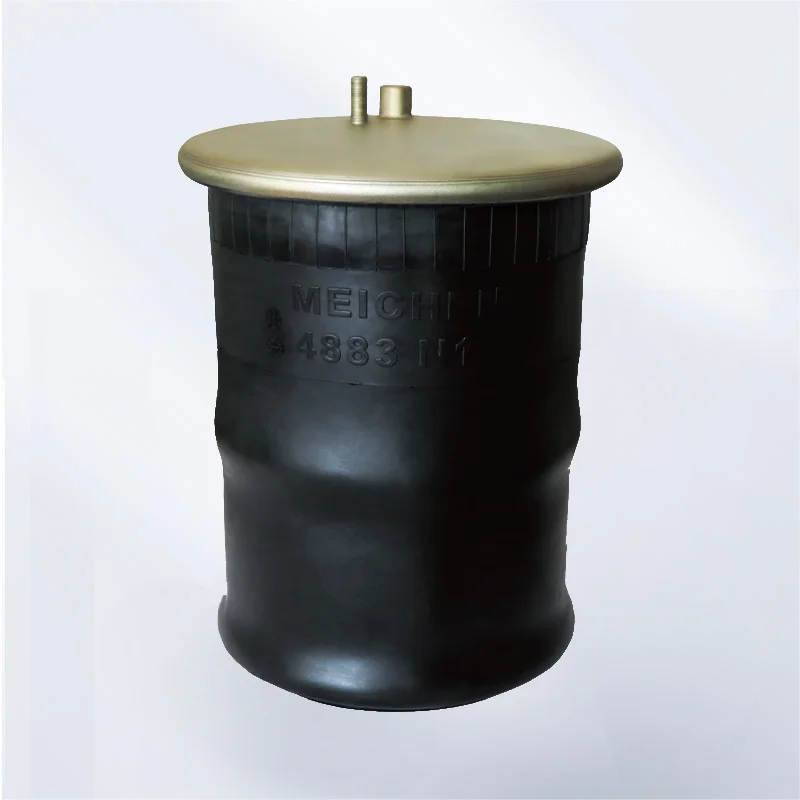
「 The シャシー エアスプリング 製品 is made for commercial vehicle suspension applications. It includes diaphragm and bellows-type structures. The range also covers suspension air springs for load bearing and lifting axle air springs for axle lifting.
Which Vehicles Gain the Most from Air Suspension?
Air suspension delivers the most value when load, vehicle height, or road conditions change often.
Heavy Trucks with Changing Payloads
A truck may operate near its maximum load on one trip and return with an empty body.
Air suspension can adjust pressure between the two conditions. This helps reduce the difference in chassis height and ride quality.
Buses with Changing Passenger Loads
Passenger numbers change at almost every stop. A bus suspension must deal with frequent weight changes without losing too much ride height.
Air suspension can also support lower entrance height when the complete system includes the required controls.
Trailers and Lifting-Axle Vehicles
Trailers may need height adjustment during loading. Some commercial vehicles also raise an unused axle under light-load conditions.
A lifting axle air spring is designed for this type of function. The product still needs correct control valves, piping, brackets, and suspension geometry.
What Are the Disadvantages of Air Suspension Compared with Coil Suspension?
Air suspension advantages and disadvantages should be considered together. The system offers more control, but it also contains more components.
Higher Initial Cost
A complete system may require air springs, a compressor, an air tank, valves, pipes, sensors, dampers, and electronic controls.
This normally costs more than a basic coil suspension.
More Possible Failure Points
An air suspension leak may start at a connector, pipe, valve, or damaged rubber surface. The compressor may then run more often to maintain pressure.
If the problem is ignored, a small leak can lead to extra wear and unexpected downtime.
Greater Maintenance Demand
Air suspension maintenance should include leak checks, height checks, rubber inspection, and compressor monitoring.
Coil springs also wear, crack, or corrode, but they do not depend on an air supply system.
When Coil Suspension Is Still the Better Choice
Coil suspension may suit you better when the vehicle carries a stable load, has a limited budget, and does not need adjustable height.
It is also practical in locations where air suspension repair support is difficult to find.
How Can You Reduce Air Suspension Failure and Repair Risk?
Many early failures come from incorrect matching or installation rather than the basic air spring design.
Match the Product to Axle Load
Start with axle load, corner load, operating pressure, and vehicle use.
Do not select an air spring only because its outside dimensions look similar to the old part.
Confirm Working Height and Suspension Travel
Check normal ride height, maximum compression, maximum extension, and total axle movement.
An air spring that stays close to its travel limit can fold incorrectly or become overstretched.
Prevent Side Loading and Surface Damage
The upper and lower mounting plates should remain aligned as the suspension moves.
Nearby brackets, pipes, cables, and sharp metal edges must not contact the rubber surface. Dirt trapped inside the folds should also be removed during inspection.
Check the Whole Air System
A low vehicle does not always mean the air spring has failed.
The actual cause may be a leaking fitting, damaged air line, faulty height valve, worn damper, or control error. Checking the complete system helps prevent repeated air suspension repair.
How Does the Chassis Air Spring Product Fit Your Project?
The air spring should be treated as part of a complete suspension, not as a standalone cure for every ride problem.
Diaphragm and Bellows-Type Options
The product range includes diaphragm and bellows-type structures. Each structure suits different installation spaces, suspension travels, and load requirements.
Your final selection should be based on the vehicle drawing and operating data.
Load-Bearing and Lifting-Axle Applications
A suspension air spring mainly carries vehicle load. A lifting axle air spring is mainly used to raise an axle.
「 The load-bearing chassis air spring can be matched to commercial vehicles after axle load, working height, suspension travel, and mounting space have been reviewed.
Engineering and Validation Support
Product matching may involve structural simulation, fatigue analysis, prototype testing, bench testing, and road testing.
Meichen has PVT and LMS equipment, nonlinear analysis capability, and production lines for air springs and suspension assemblies. This allows the engineering team to review both the rubber component and its operating system.
Air Suspension or Coil Suspension: Which Should You Choose?
Choose air suspension when your load changes often, ride height matters, or you need better vibration isolation and lifting-axle control.
Choose coil suspension when the load stays stable, cost is the main concern, and a simple passive system is enough.
Before requesting a quotation, prepare your vehicle model, axle load, ride height, suspension travel, mounting drawing, road conditions, and environmental requirements. You can contact the service team for product matching, technical review, and OEM or ODM project support.
FAQについて
Q1: Is air suspension always more comfortable than coil suspension?
A1: No. Air suspension offers more adjustment, but comfort still depends on ride height, pressure, dampers, suspension geometry, tires, and vehicle load.
Q2: Does air suspension carry more weight than coil suspension?
A2: Not automatically. Load capacity depends on the complete suspension design, though air suspension can adjust pressure when vehicle load changes.
Q3: Why does ride height matter in an air suspension system?
A3: Correct ride height supports suspension travel, axle position, alignment geometry, ground clearance, and stable vehicle movement.
Q4: What commonly causes air suspension failure?
A4: Common causes include leaks, abrasion, side loading, incorrect working height, damaged air lines, faulty valves, and worn dampers.
Q5: When is coil suspension the better choice?
A5: Coil suspension is often better for fixed loads, lower budgets, simple vehicle designs, and locations with limited air-system repair support.