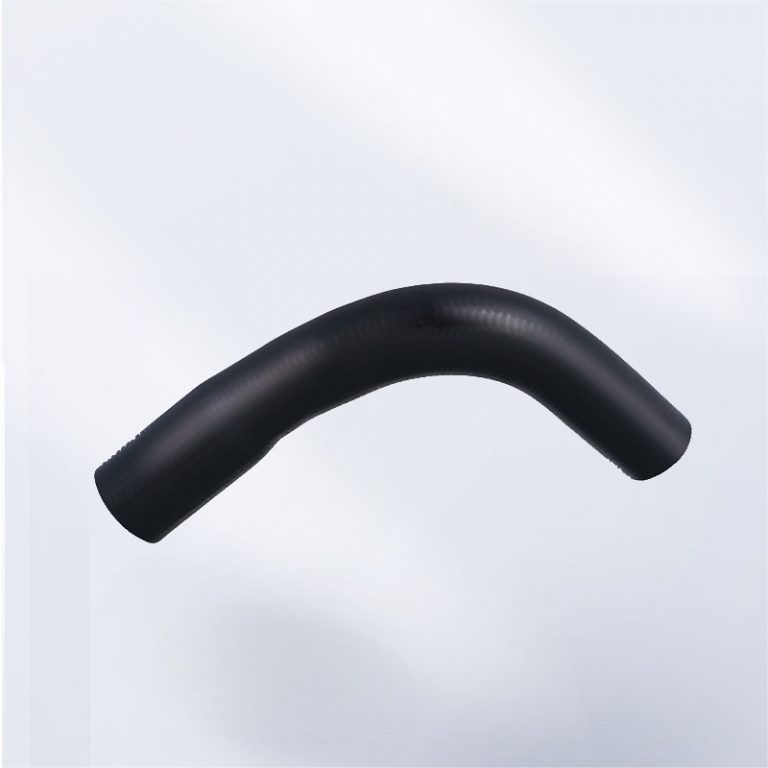
A flexible hose can look simple from the outside. You see a tube, check the size, bend it by hand, and it seems ready to use. But once it is installed in a vehicle cooling route, the real test starts. Heat, coolant flow, pressure change, vibration, clamps, tight bends, and connector positions all begin to affect the hose.
That is why braided vs unbraided flexible hose is not just a small structure difference. It changes how the hose handles pressure, how easily it bends, how much it expands, and how long it can stay stable in service. If you choose the wrong structure, the hose may kink, swell, crack near bends, leak at fittings, or fail earlier than expected.
メイチェン is a practical name to consider when you need automotive hose and fluid delivery parts with engineering support behind them. Founded in 2004, Meichen works on automotive suspension systems, vibration reduction systems, and fluid delivery systems. Its product capability covers rubber extrusion, plastic extrusion, molding, blow molding, injection processing, automatic assembly, air tightness testing, and system validation. For cooling hose buyers, this matters because the part must fit real vehicle conditions, not just a drawing. The company’s experience with EPDM, TPV, TPV with reinforced layer, PA, and assembly supply gives buyers more room to match hose structure to pressure, temperature, coolant, sealing, and routing needsimg.Braided vs Unbraided Flexible Hose Differences, Pressure, and Best Uses.webp
 Why Does Flexible Hose Structure Affect Pressure, Leaks, and Service Life?
Before you compare braided and unbraided flexible hose, you need to look at what the hose is asked to do. A cooling hose may connect the radiator, auxiliary water tank, motor, electric control unit, or battery temperature control system. Some routes face higher pressure. Some need tighter bending. Some need lower weight. Some need stronger sealing at connectors.
Use Braided Hose to Control Expansion Under Pressure
A braided hose has a reinforcement layer inside the hose wall. This layer is not decoration. It helps the hose resist expansion when internal pressure rises. In many cooling systems, pressure does not stay flat. It changes with temperature, pump operation, and vehicle load.
Without reinforcement, a hose may expand too much, lose shape, or create stress near fittings. A braided or reinforced structure gives better control. It is usually the safer choice when burst pressure matters.
Use Unbraided Hose When Flexibility Matters More
An unbraided flexible hose does not have a separate braided reinforcement layer. That does not mean it is poor quality. It simply fits a different job. If the route has lower pressure, compact space, or a strong need for easy bending, an unbraided structure can be a better match.
For lightweight cooling design, materials such as PA or TPV can help reduce weight while keeping enough stability for the right application.
Avoid Early Cracking by Matching Structure to Routing
A stiff reinforced hose used in a very tight route may create stress near the connector. A soft unbraided hose used in a high-pressure route may swell or kink. Both choices can be wrong if the route is not checked first.
So the point is simple. Do not choose by appearance. Choose by pressure, bend radius, temperature, coolant, connector design, and service target.
What Is a Braided Flexible Hose?
A braided flexible hose uses an inner layer, a reinforcement layer, and an outer layer. The inner layer handles the medium. The reinforcement layer supports pressure. The outer layer protects the hose from heat, wear, and outside damage.
Reinforcement Layer Improves Burst Pressure Resistance
The main reason to use a braided hose is pressure control. When the coolant heats up and pressure rises, the reinforcement layer helps the hose keep its shape. This lowers the chance of ballooning or sudden burst failure.
In a TPV knitting hose structure, the inner layer provides sealing performance, the enhancement layer improves burst pressure, and the outer layer adds wear resistance. This is a clear example of why reinforcement is useful in vehicle cooling routes.
Braided Structure Handles Pulsation and Vibration Better
Vehicle hoses do not sit still. The engine moves. Road vibration passes through the system. Pumps create flow changes. Over time, this repeated movement can weaken a simple hose.
A braided structure helps the hose resist repeated stress. It is especially useful in cooling routes that run longer distances, sit near heat, or connect parts that move slightly during operation.
It Fits Higher-Demand Cooling and Fluid Routes
Braided flexible hose is often a good fit when you need stronger burst pressure, better dimensional control, and longer service life. It may be used in cooling systems where pressure and vibration are more demanding.
It is not always the lightest or easiest hose to route, but when safety margin matters, the reinforcement layer can be worth it.
What Is an Unbraided Flexible Hose?
An unbraided flexible hose has a simpler wall structure. It can still be made from strong material, but it does not rely on a woven reinforcement layer. This makes it useful for routes where easy installation, lower weight, and bending are more important than high burst resistance.
Simpler Structure Makes Routing Easier
Some vehicle spaces are narrow and crowded. A softer hose can be easier to fit around nearby parts. It can also reduce assembly pressure when the route has many curves.
For low-pressure cooling connections, an unbraided hose may be enough as long as the material is matched to coolant, heat, and aging needs.
Lightweight Design Fits Low-Pressure Connections
Weight reduction is a real topic in modern vehicle system design. PA and TPV structures are often used when buyers want lighter cooling lines or cleaner routing. This does not mean every rubber hose should be replaced. It means material and structure should match the use case.
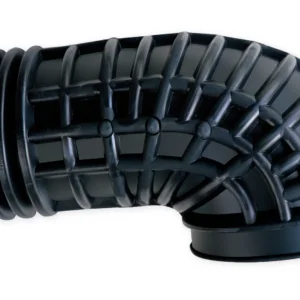
メイチェン Cooling System Products(Plastic Material) include materials such as EPDM, TPV, TPV with reinforced layer, and PA. This gives buyers more choices between flexible connection, reinforced structure, and lightweight plastic material design.
.jpg)
Good Bend Radius Still Needs Proper Material Choice
Unbraided hose still has limits. If you bend it too sharply, it may kink. If the material cannot handle heat, it may age early. If pressure is higher than expected, it may expand.
A good supplier should ask for the real route, not just the diameter. Bend radius, straight length near fittings, connector angle, and nearby heat sources all matter.
Braided vs Unbraided Flexible Hose: Which One Should You Choose?
There is no one answer for every vehicle. A braided hose is not always better. An unbraided hose is not always weaker. You should choose based on what the system needs.
Choose Braided Hose for Higher Pressure and Burst Risk
Choose braided flexible hose when pressure is higher, pressure changes often, or burst resistance is a key concern. It is also useful when the hose must keep a stable shape under vibration.
This type of hose is often better for heavy-duty cooling routes, longer service life targets, and places where leakage would be expensive or hard to repair.
Choose Unbraided Hose for Compact Space and Weight Control
Choose unbraided flexible hose when the route has lower pressure, limited space, and a stronger need for flexibility. It can also support lightweight design when PA or TPV material is suitable.
For short cooling connections, auxiliary routes, and compact layouts, a well-designed unbraided hose can be more practical than an overly stiff reinforced hose.
Match Hose Choice to Coolant, Temperature, Pressure, and Routing
A better way to decide is to list the working conditions first. What medium does the hose carry? What is the temperature range? What is the pressure range? How tight is the route? What connector will be used?
After that, you can decide whether reinforcement is necessary. You can also compare Meichen’s wider 製品 if your project needs more than one type of automotive hose or component.
How Do Meichen Cooling System Products(Plastic Material)Support These Hose Choices?
This topic fits Meichen’s cooling system product line well because the product family covers both reinforced and plastic material directions. It is not limited to one fixed structure.
TPV With Reinforced Layer Supports Stronger Pressure Needs
For routes that need better burst pressure control, TPV with reinforced layer for cooling hose stability is a useful direction. The reinforcement layer helps the hose handle pressure, while the inner and outer layers handle sealing and protection.
This structure is helpful when buyers worry about expansion, pressure fluctuation, and long service life.
PA and TPV Materials Help Lightweight Cooling System Design
Meichen also works with PA and TPV material options for cooling system products. PA can be used in smooth or corrugated tubes, while TPV can support flexible connection needs. These materials can help buyers reduce weight and improve route design when the system does not require a traditional reinforced rubber hose.
The product page also notes use in passenger cars, commercial vehicles, construction machinery, energy storage cabinets, and charging piles. That wide application range is useful for buyers handling several project types.
Coolant-Focused Design Supports Flow, Sealing, and NVH Requirements
Cooling hose selection is not only about pressure. The hose also needs to support coolant flow, sealing, heat absorption, heat dissipation, and NVH requirements. If the hose is too stiff, it may transfer vibration. If it is too soft, it may deform. If the connector fit is poor, leakage may start early.
Meichen’s experience with cooling system parts helps buyers review these details together instead of treating the hose as a single tube.
What Should Buyers Check Before Ordering Braided or Unbraided Flexible Hose?
Before placing an order, do not only ask, “Is it braided?” That question is too narrow. A good inquiry should help the supplier judge the full working condition.
Confirm Pressure Range Before Choosing Reinforcement
Pressure range decides whether reinforcement is needed. Ask about working pressure, burst pressure, pressure cycling, and safety margin. If the hose sits in a route with frequent pressure change, braided or reinforced design may be safer.
Check Bend Radius and Installation Space
Send a route drawing if you have one. If not, send photos, hose length, connector position, and nearby parts. A hose that passes a bench test can still fail if it is forced into a bad route.
Review Material Compatibility With Coolant and Heat
Coolant compatibility and heat aging should be checked before mass production. Ask about material selection, aging tests, leakage tests, and dimensional stability. For plastic material cooling parts, also check whether the design needs smooth tube, corrugated tube, TPV connection, or reinforced TPV hose.
Ask About Testing, Assembly, and Custom Development
Meichen has knowledge in PVT validation, LMS verification, air tightness testing, automatic assembly, dimensional control, and several forming processes. For buyers, this is useful when a custom hose or complete assembly is needed.
If you need more company background before sending project details, the about us page can help. When you already have drawings, samples, pressure data, coolant information, or connector requirements, you can マイヒェンに連絡する for service and technical discussion.
FAQについて
Q1: Is Braided Flexible Hose Always Better Than Unbraided Flexible Hose?
A1: No. Braided flexible hose is better for higher pressure, pulsation, and burst resistance. Unbraided flexible hose can be better for lower pressure, tighter routing, and lighter design.
Q2: When Should You Choose an Unbraided Flexible Hose?
A2: Choose an unbraided flexible hose when the system has lower pressure, compact space, and a stronger need for easy bending or weight control.
Q3: Does Braiding Improve Hose Pressure Resistance?
A3: Yes. The braided reinforcement layer helps control hose expansion and improves burst pressure resistance under pressure change.
Q4: Can Plastic Material Cooling Hose Replace Traditional Rubber Hose?
A4: Yes, in some systems. PA and TPV cooling hose designs can support lightweight routing and stable coolant flow, but the final choice depends on pressure, temperature, bend radius, and connector design.
Q5: Which Meichen Product Fits Braided and Unbraided Flexible Hose Selection?
A5: Meichen Cooling System Products(Plastic Material) fit this topic because they include EPDM, TPV, TPV with reinforced layer, and PA options for cooling routes in vehicles, energy storage cabinets, and charging piles.