If you are sourcing suspension components for commercial vehicles, you already know the pressure. You need parts that are strong, lightweight, and reliable under real road conditions. That is where advanced design methods begin to matter. Modern thrust rod development no longer depends on trial-and-error. It relies on simulation, material science, and data-driven structure refinement.
Meichen is a well-established automotive component manufacturer founded in 2004, focusing on suspension systems, vibration reduction, and fluid transfer products. With around 1800 employees and a CNAS-certified laboratory, it supports global OEM customers across commercial vehicles and construction machinery. Its engineering team uses advanced CAE tools such as ABAQUS and LMS to carry out nonlinear analysis and durability validation. This allows products to perform under demanding conditions such as overload, vibration, and temperature variation. For buyers, this kind of capability often separates stable long-term performance from unexpected field failures. It is not just about making parts, it is about making parts that hold up when things get tough.
Why Thrust Rod Structural Optimization Is Critical for Modern Vehicle Performance?
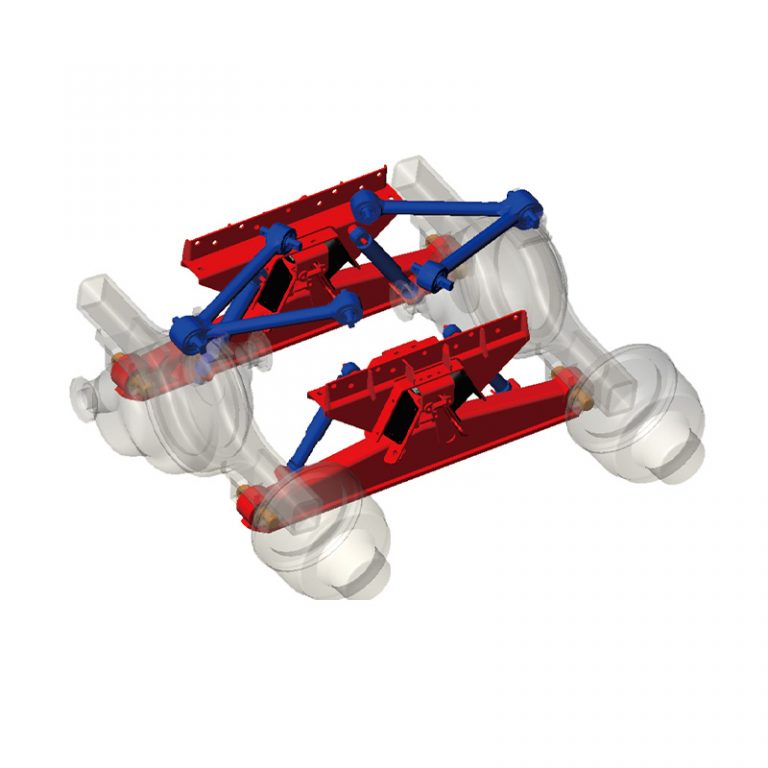
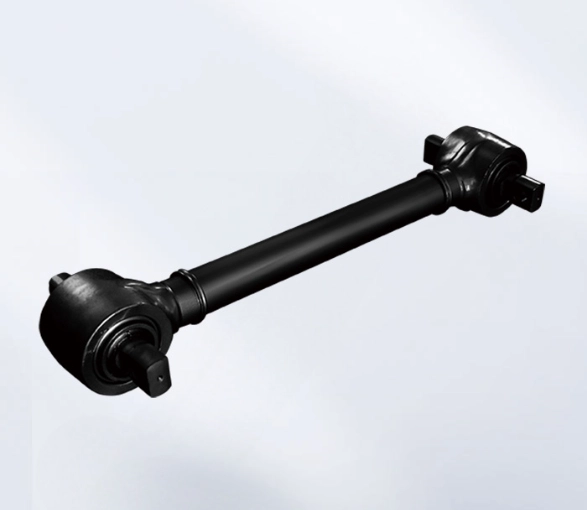
When you work with heavy-duty vehicles, thrust rods are not just simple connectors. They link the frame and axle, support the powertrain system, and transmit forces that leaf springs cannot handle alone . These include traction force, braking force, and reaction torque.
If the structure is too heavy, fuel consumption increases. If it is too weak, cracks and deformation appear early. In real-world use, failures often come from uneven stress distribution. That is why structural refinement has become essential.
Vehicles today also face more complex working conditions. Mining trucks and construction machinery operate under overload, rough terrain, and repeated impact. A traditional design may look safe on paper, but it does not always survive these environments. That is where computational methods begin to make a real difference.
What Challenges Do Engineers Face in Designing I-Type and V-Shaped Thrust Rods?
Designing thrust rods involves more constraints than it first appears. The challenges usually come from conflicting requirements and unpredictable working conditions.
Balancing Strength and Lightweight Requirements
You want to reduce weight. That improves fuel efficiency and overall performance. But the thrust rod still needs to carry most of the load in heavy vehicles .
In practice, even a small weight reduction can be valuable. But going too far can shorten fatigue life. This balance is often where projects struggle.
Complex Load Conditions and Multi-Directional Forces
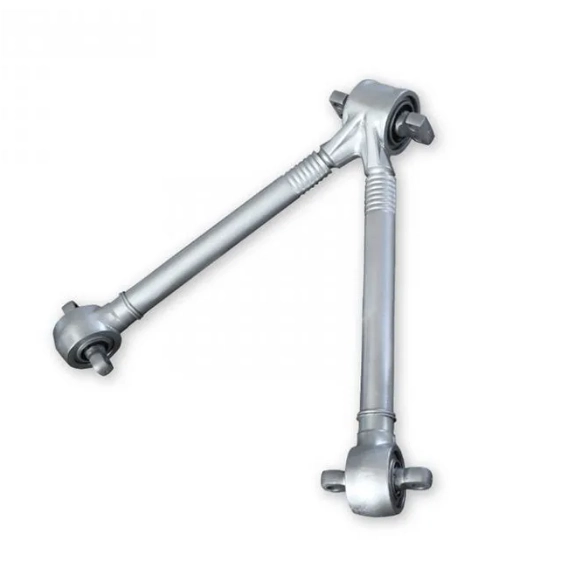
An I-type structure mainly deals with longitudinal force. A En forma de V structure also handles lateral force and stabilizes the axle .
Real conditions are rarely simple. Loads change direction, vibration adds stress, and sudden impacts are common. These factors make design much harder than basic calculations suggest.
Limitations of Traditional Design Methods
Traditional methods rely heavily on experience and safety margins. This often leads to overdesign.
How Computational Topology Optimization Transforms Thrust Rod Design?
Instead of guessing where material should go, topology optimization lets the load path guide the design. This changes the entire approach.
It starts with a defined design space and load conditions. Then unnecessary material is gradually removed. The result is a structure that carries force more efficiently.
Fundamental Principles of Topology Optimization
The concept is straightforward. Keep material where it contributes to stiffness. Remove it where it does not.
This often leads to shapes that look different from traditional designs. But the performance is usually better, especially in terms of stress distribution.
Integration with CAE and Simulation Tools
This method depends on simulation tools. Advanced systems allow nonlinear analysis and large deformation studies .
Validation is also important. Fatigue testing and system-level testing help confirm that the design performs as expected in real conditions.
Benefits for Automotive Structural Components
The main advantage is efficiency. You get lower weight and improved durability at the same time.
Stress concentration is reduced, which helps extend service life. In many cases, material usage decreases while performance improves. That is not easy to achieve with traditional methods.
How Do I-Type and V-Shaped Thrust Rod Designs Differ in Optimization Strategy?
Even with the same method, the design focus is not identical. Each structure has its own role.
Optimization Focus for I-Type Thrust Rods
The I-type thrust rod focuses on axial stiffness. The load path is mostly straight.
This makes the optimization process more direct. Material is concentrated along the main axis, leading to a simple but efficient structure.
Optimization Focus for V-Shaped Thrust Rods
El Varilla de empuje en forma de V must handle both longitudinal and lateral forces. It also helps stabilize the axle.
This adds complexity. The design must consider symmetry and force distribution between both sides. Small changes in geometry can have a noticeable impact.
Comparative Performance Analysis
I-type designs are often used in standard applications because they are easier to manufacture. V-shaped designs are more suitable for demanding conditions where stability is critical.
If the vehicle operates under heavy load or uneven terrain, the second option usually provides better performance. However, it requires more precise design and validation.
How Does Meichen Apply Topology Optimization in Thrust Rod Development?
Turning theory into real products requires more than software. It requires coordination between design, materials, and manufacturing.
Advanced R&D and Simulation Capabilities
A strong engineering team is essential. With over 120 R&D personnel and advanced testing systems, simulation results can be verified through experiments .
This includes fatigue testing, temperature testing, and system-level validation. These steps reduce the gap between simulation and real-world performance.
Material and Manufacturing Optimization
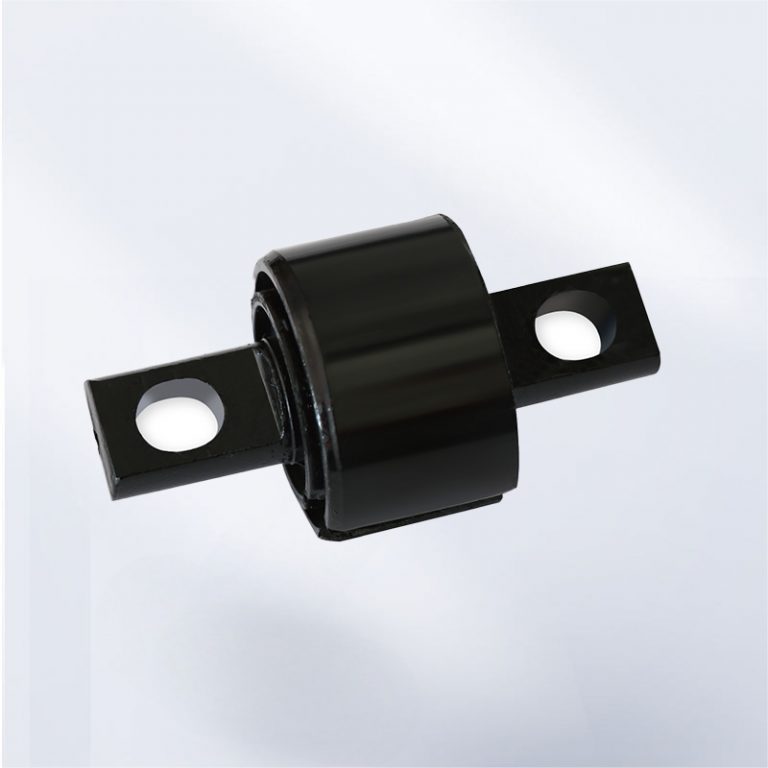
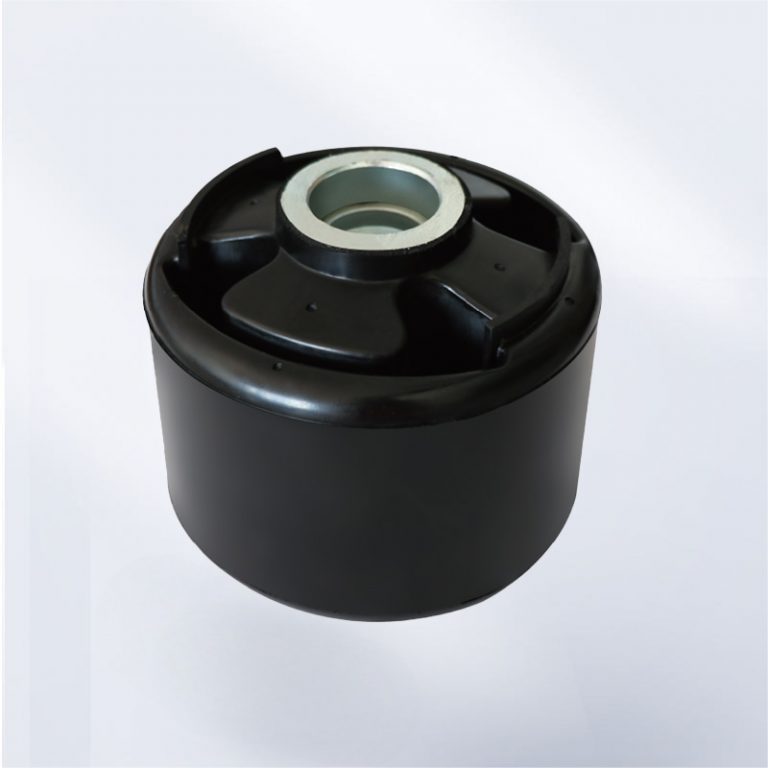
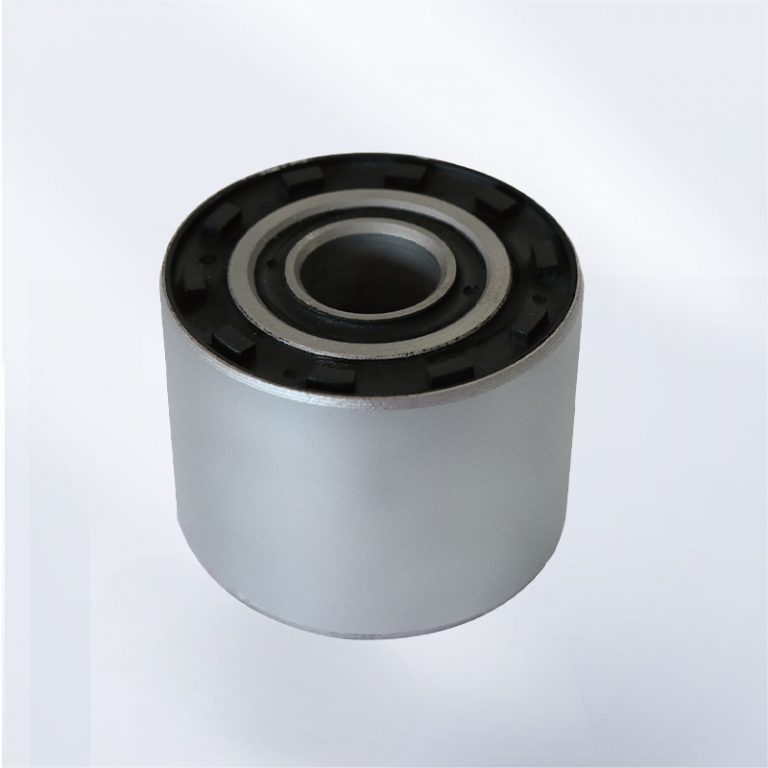
Material selection depends on working conditions. Common options include alloy steel, carbon steel, aluminum alloy, and rubber-metal combinations .
Manufacturing processes also play a role. Forging, welding, and automated production improve consistency and durability.
Product-Level Implementation
Thrust rods are widely used in commercial vehicles and construction machinery. These environments involve overload, vibration, and long operating hours.
Products designed with validated methods are better able to handle these conditions. This reduces the risk of early failure and improves reliability over time.
What Are the Real-World Benefits of Optimized Thrust Rod Structures for OEMs and Buyers?
At the end of the day, the focus is on results. Not theory.
Improved Vehicle Performance and Stability
Better structural design leads to more even load distribution. This reduces deformation and improves handling.
Drivers may not notice the component directly, but they notice the stability.
Cost Efficiency and Lifecycle Value
Reduced material usage can lower production cost. More importantly, improved durability reduces replacement frequency.
Over time, this leads to lower total cost.
Enhanced NVH and Driving Comfort
Optimized structures also help reduce vibration transmission. This improves comfort, especially for vehicles that operate for long hours.
How to Choose the Right Thrust Rod Supplier for Optimized Designs?
Choosing a supplier requires careful evaluation. Price alone is not enough.
Evaluate Engineering and Simulation Capabilities
Check whether the supplier uses advanced CAE tools and performs real validation testing. Simulation without testing is not reliable.
Assess Manufacturing and Quality Control
Certifications such as IATF16949 and CNAS lab approval indicate a structured quality system .
Consistent production quality is just as important as design.
Why Meichen Is a Reliable Partner
Long-term cooperation with global OEMs shows proven reliability. Strong R&D capability and patented technologies support continuous improvement .
The ability to handle customized projects is also important when requirements vary.
Conclusión
Topology optimization has changed how thrust rods are designed. It allows better performance with less material and fewer risks.
I-type and V-shaped structures serve different purposes. The choice depends on working conditions and performance requirements.
What matters most is how design, materials, and validation come together in real production. When all these elements are aligned, the result is a component that performs reliably over time.
To ensure your vehicle’s suspension system provides optimal performance, stability, and durability, it’s crucial to select the right thrust rod geometry tailored to your specific application. Whether you’re working with heavy-duty trucks or vehicles with dynamic handling needs, the proper design choice can make all the difference.
If you’re looking to improve your vehicle’s suspension setup, consider partnering with Meichen. With advanced design capabilities, comprehensive testing, and years of expertise, they can help you choose the right thrust rod geometry for your needs and enhance the overall driving experience. Let’s take your suspension system to the next level—reach out to Meichen today to explore your options.
Preguntas frecuentes
Q1: What Is the Main Function of a Thrust Rod?
A: It connects the frame and axle, transmits traction and braking forces, and helps maintain stability under load.
Q2: Why Are V-Shaped Thrust Rods Used in Heavy-Duty Vehicles?
A: They can handle both longitudinal and lateral forces, which improves stability in complex working conditions.
Q3: How Does Topology Optimization Reduce Weight?
A: It removes unnecessary material and keeps only the parts that carry load effectively.