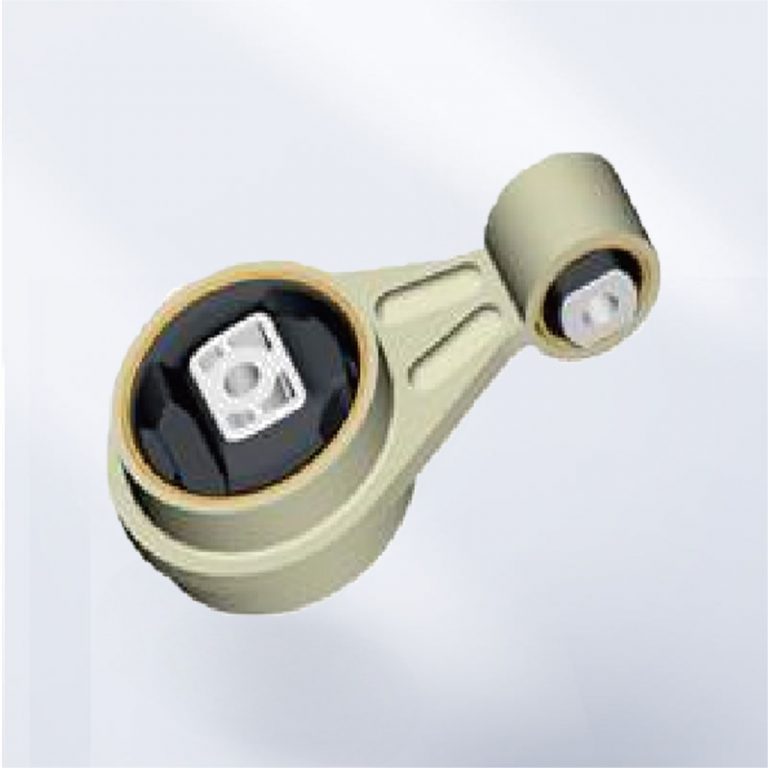
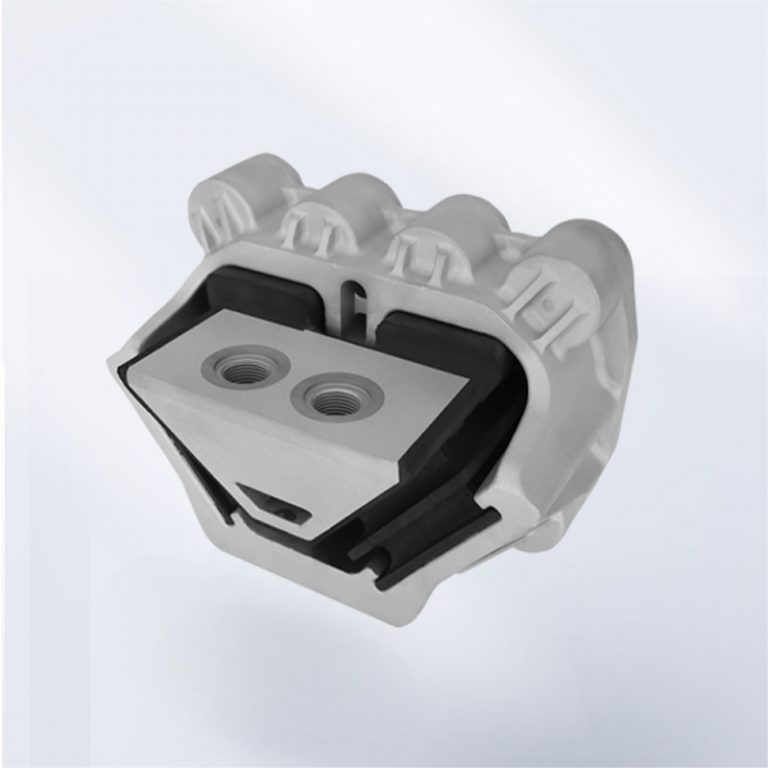
In the realm of commercial automobiles or robust chassis setups, minor design elements can subtly determine comprehensive effectiveness. Suspension firmness and control characteristics receive influence not solely from springs or absorbers. The configuration of thrust rods directly shapes the manner in which forces move between the axle and the frame.
Suspension providers in this area frequently highlight ميشن. As a producer specializing in suspension frameworks, oscillation mitigation, and liquid conveyance items, it has established a firm standing since 2004. With exceeding 1,800 staff members and alliances with worldwide OEMs including Volvo, Ford, and PACCAR, its expertise derives from practical implementations. Its CNAS-approved laboratory facilitates more than 200 assessment procedures, encompassing weariness, NVH, and substance output. Such a foundation proves essential when parts need to withstand excess burdens, extended distances, and varied surface challenges.
Opting for the appropriate thrust rod configuration goes beyond mere form. It substantially impacts vehicle conduct amid stopping, speeding up, and curving.

How Do Thrust Rod Geometries Influence Suspension Stiffness?
Suspension firmness relies on the way forces pass through the system, rather than simply spring strengths. The thrust rod’s configuration establishes that passage route.
Force Transmission and Structural Alignment
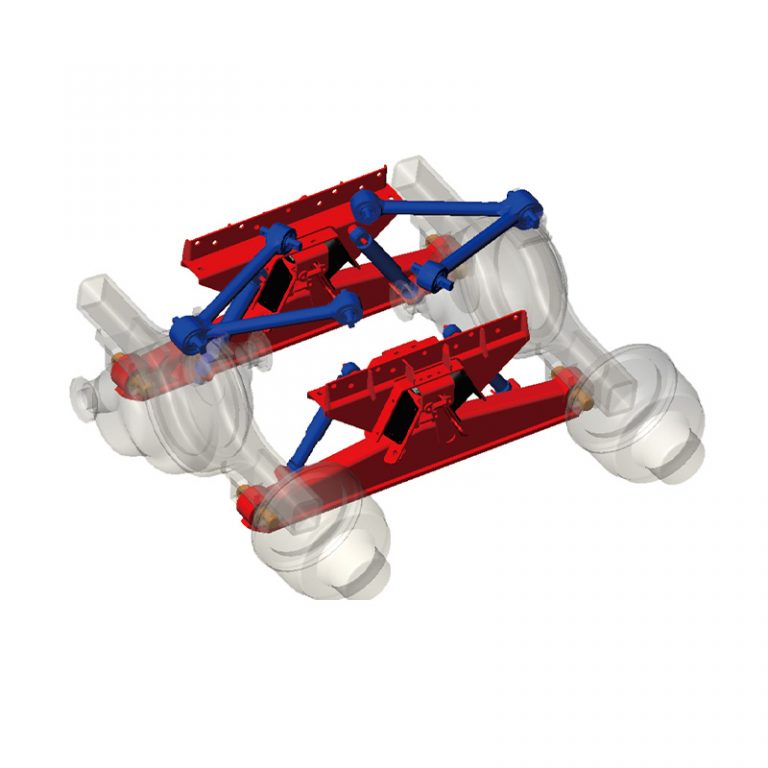
A thrust rod links the frame and axle together. Its purpose involves bearing pulling force, stopping force, and opposing torque. Leaf springs by themselves fail to manage these forces adequately. Technical information indicates that thrust rods address this shortfall and preserve correct axle positioning.
With proper configuration, forces proceed evenly and reliably. Otherwise, minor positioning errors can impair automobile steadiness.
Geometry-Driven Stiffness Characteristics
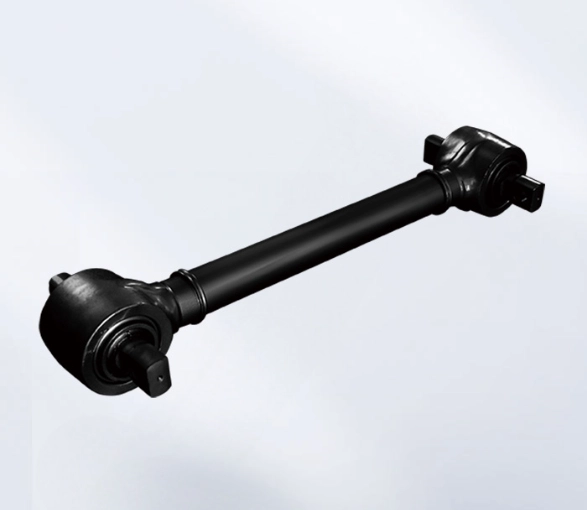
An I-type form generates a direct force route. This boosts forward-backward firmness and enhances command during speeding up and stopping.
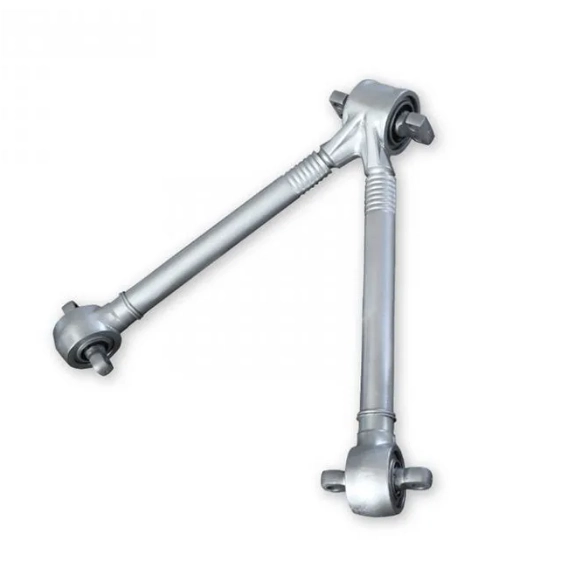
ألف على شكل V form allocates force over dual paths. This strengthens firmness in various orientations and bolsters steadiness when sideways forces emerge.
Engineering Support Behind the Design
Substance choice holds a vital position. Parts constructed from alloy steel, carbon steel, and elastomer substances can harmonize robustness and adaptability.
Assessment techniques like weariness confirmation and NVH examination replicate actual functional scenarios. Consequently, this verifies that firmness output stays dependable across durations.
Why Does Poor Thrust Rod Geometry Lead to Unstable Handling?
Control difficulties frequently connect to force positioning errors.
Problem: Excessive Axle Movement and Poor Control
Should the configuration fail to align with the usage, the axle might displace ahead, behind, or to the sides beneath burden.
Consequently, this produces postponed direction reaction, unsteady stopping, and a less foreseeable operation feel. In robust automobiles, such effects intensify under complete burden.
Solution: Optimized Geometry for Stability
The form needs to correspond to the operational context. A direct layout suits forward-backward force oversight, whereas a twin-arm layout aids in sideways force oversight.
Selecting configuration according to genuine application scenarios minimizes undesired shifts and elevates steadiness.
Product Recommendation Based on Application
For automobiles functioning primarily under substantial burdens and linear travel, an I-نوع عصا الدفع delivers robust central backing and steady force passage.
For automobiles encountering curving pressures or irregular ground, a V-shaped thrust rod furnishes superior sideways steadiness and diminishes axle shifts.
What Are the Key Differences Between I-Type and V-Shaped Thrust Rod Designs?
Deciding between these dual forms hinges on the automobile’s operational surroundings.
I-Type Thrust Rod: Simplicity and Strength
The I-type layout employs a solitary direct form. It concentrates on conveying forward loads proficiently.
Such a design finds broad use in commercial automobiles and building equipment, where endurance and burden capacity hold utmost importance.
Moreover, its straightforward layout simplifies upkeep procedures.
V-Shaped Thrust Rod: Multi-Directional Stability
The V-shaped layout disperses burden via two extensions. This lessens pressure buildup and enhances equilibrium.
It performs more effectively amid sideways forces, like those during curving or off-path travel.
Comparative Performance Insights
The primary distinction resides in force orientation.
The I-type layout supplies robust ahead and behind oversight. The V-shaped layout advances equilibrium over multiple orientations.
Ultimately, the suitable option relies on automobile utilization patterns.
How Does Thrust Rod Geometry Affect Vehicle Handling Characteristics?
Control output mirrors the suspension system’s proficiency in overseeing forces amid movement.
Cornering Stability and Lateral Control
Amid curving, sideways forces impact the axle. A V-shaped form assists in restricting lateral shifts and bolstering steadiness.
As a result, this yields fluid curving conduct and superior command beneath burden.
Ride Comfort and Vibration Isolation
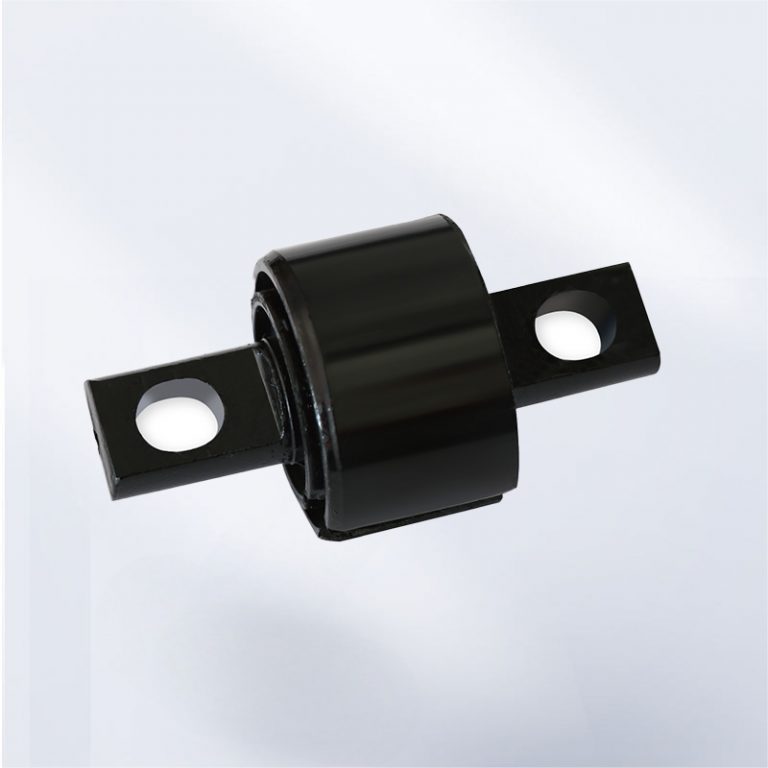
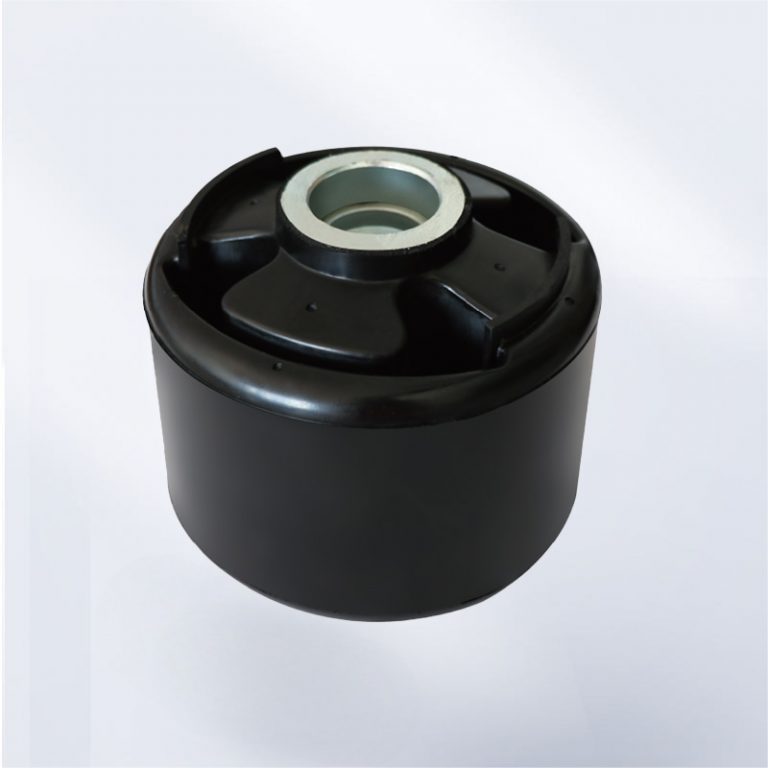
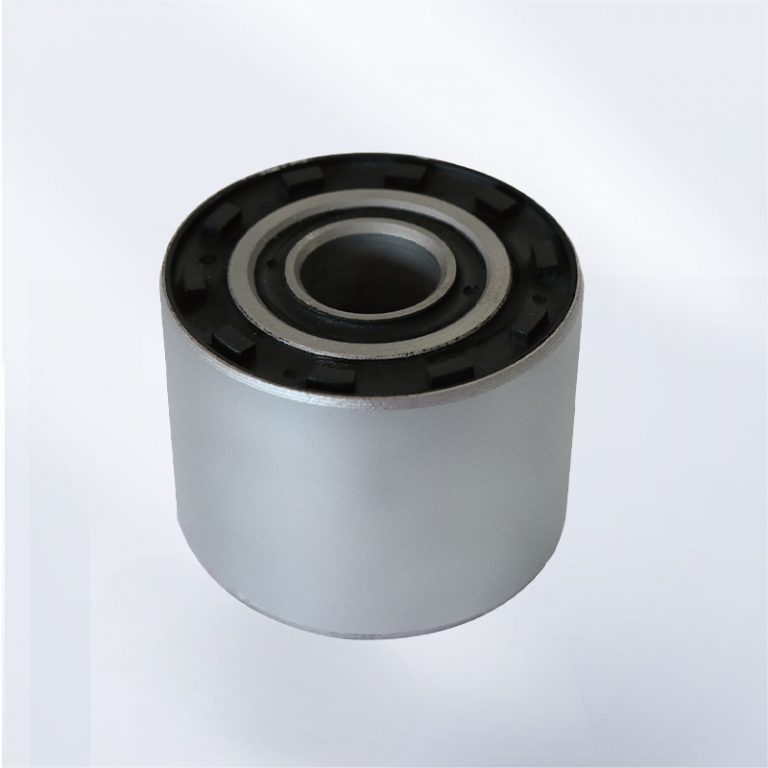
Thrust rods incorporate elastomer parts that capture oscillations.
A layout featuring reduced central firmness and elevated surrounding firmness can lessen oscillations while upholding form steadiness.
Thus, this elevates ease, particularly over lengthy travel spans.
Braking and Acceleration Response
During stopping or speeding up, force passage demands promptness and steadiness.
When configuration aligns well, the reaction appears uniform. Conversely, misalignment may introduce minor postponements or irregular force allocation.
Why Do Many Suspension Systems Fail Under Heavy Loads?
Problem: Uneven Stress Distribution and Material Fatigue
Flawed configuration can gather strain at particular locations.
Across time, recurring burdens provoke substance weariness, fissures, or warping. Robust-duty automobiles face heightened vulnerability to this hazard.
Solution: Advanced Design and Material Selection
Equilibrated configuration allocates burden more uniformly.
Employing fitting substances heightens opposition to weariness and prolongs functional duration.
Engineering Capabilities Supporting Durability
Sophisticated assessment frameworks can replicate genuine operational contexts.
With surpassing 200 assessment procedures and weariness confirmation abilities, output receives verification prior to large-scale fabrication.
Therefore, this mitigates chances of premature breakdowns in practical deployment.
How to Choose the Right Thrust Rod Geometry for Your Application?
Picking the fitting configuration necessitates pragmatic review of the automobile’s demands.
Application-Based Selection Criteria
For road transport and substantial burdens, a layout emphasizing forward-backward firmness fits better.
For blended scenarios or regular curving, a layout managing multi-orientation forces serves as the preferable selection.
Performance Versus Cost Considerations
Diminished starting expense might result in elevated upkeep subsequently.
A properly aligned layout curtails degradation and lengthens service periods.
Customization Based on Vehicle Needs
Varied automobiles necessitate distinct setups.
Fabrication techniques including extrusion, forming, and assembly enable parts to adjust to precise contexts.
Why Is a Reliable Supplier Critical for Thrust Rod Performance?
Even superior layouts depend on uniform fabrication standards.
Strong R&D and Testing Capabilities
A provider possessing robust research and development can affirm layouts prior to fabrication.
Instruments like CAE examination and weariness assessment aid in honing output.
Proven Industry Experience
Background with worldwide OEMs suggests that items fulfill actual functional needs.
It further demonstrates capacity to address diverse automobile bases.
Comprehensive Manufacturing and Quality Control
Contemporary fabrication frameworks elevate uniformity and lessen flaws.
Complete cycle quality oversight guarantees steady output from initial substance picking to ultimate item dispatch.
This carries weight when sustained dependability remains essential.
To ensure your vehicle’s suspension system provides optimal performance, stability, and durability, it’s crucial to select the right thrust rod geometry tailored to your specific application. Whether you’re working with heavy-duty trucks or vehicles with dynamic handling needs, the proper design choice can make all the difference.
If you’re looking to improve your vehicle’s suspension setup, consider partnering with Meichen. With advanced design capabilities, comprehensive testing, and years of expertise, they can help you choose the right thrust rod geometry for your needs and enhance the overall driving experience. Let’s take your suspension system to the next level—reach out to Meichen today to explore your options.
أسئلة متكررة
Q1: What Is the Main Function of a Thrust Rod?
A: It links the frame and axle, conveying pulling and stopping forces while preserving axle steadiness.
Q2: Which Geometry Is Better for Heavy-Duty Applications?
A: A direct layout generally suits substantial burdens and road usage, owing to its robust forward-backward firmness.
Q3: Why Does Poor Geometry Affect Handling?
A: Flawed configuration permits undesired axle shifts, resulting in unsteady direction and stopping output.
Q4: How Can Service Life Be Improved?
A: Suitable configuration, fitting substances, and comprehensive assessment aid in curtailing weariness and prolonging endurance.
Q5: Is Custom Design Necessary for Different Vehicles?
A: Yes. Varied burden scenarios and surroundings demand particular layouts to attain optimal output.